Anxiety & overthinking
How to Stop Overthinking: 9 Techniques That Work in the Moment
Practical, evidence-informed ways to interrupt rumination and worry loops, from scheduled worry time to grounding, with tips for overthinking at night.
Overthinking feels productive. It seems like if you replay that conversation one more time, or think through every possible outcome of tomorrow's meeting, you will finally find the answer and be able to relax. But the relief never comes. You just end up tired, anxious and no closer to a decision.
Psychologists often distinguish two main types of overthinking:
- Rumination: going over the past, such as what you said, what they meant, what you should have done.
- Worry: scanning the future for things that could go wrong.
Both feel like problem-solving but rarely solve anything. Here are nine techniques to interrupt the loop.
1. Notice and name it
You can't stop a loop you don't notice. When you catch yourself replaying or catastrophising, label it: "I'm ruminating" or "This is worry." Naming a thought pattern creates a small gap between you and it, and in that gap you get a choice.
2. Ask: is this solvable right now?
Divide the worry into two piles:
- Solvable now: there is a concrete next step. Write it down and, if possible, do it or schedule it.
- Not solvable now: it depends on other people, the future or information you don't have. Thinking harder won't change it.
For the second pile, the work is not finding an answer. It is learning to let the thought be there without engaging with it.
3. Schedule worry time
It sounds odd, but it works for many people. Pick a 15-minute slot each day, not right before bed. When a worry pops up outside that time, jot it down and tell yourself "Not now, at 5:30." When worry time arrives, go through the list. Many items will no longer feel important, and the ones that do can be problem-solved deliberately.
4. Get it out of your head
Thoughts circling in your head feel bigger and more urgent than the same thoughts on paper. Try a brain dump: set a timer for five minutes and write everything you are thinking, without editing. Afterwards, circle anything actionable. The Affirmation Journal for Anxiety pairs this kind of reflection with calming words and short mindful practices.
5. Ground yourself in the present
Overthinking lives in the past and future. Grounding brings you back to now. A popular method is 5-4-3-2-1: name five things you can see, four you can feel, three you can hear, two you can smell and one you can taste. It is simple enough to do in a meeting or on a bus.
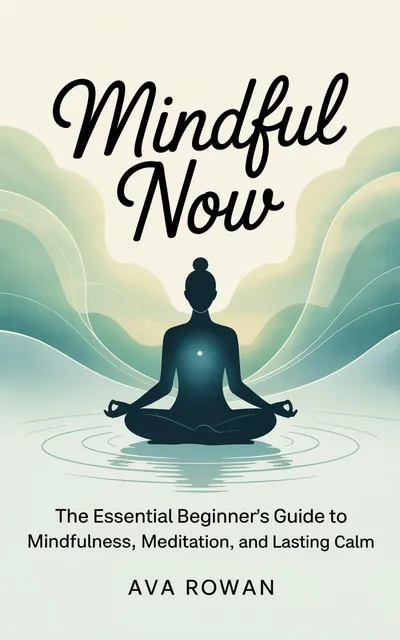
Regular mindfulness practice makes grounding easier over time. If you are new to it, Mindful Now is a beginner's guide with short practices that fit a busy day.
6. Breathe out longer than you breathe in
Anxiety speeds up breathing, and fast breathing tells your body there is danger. Slow it down deliberately: breathe in for a count of four, out for six to eight. Longer exhales activate the body's calming response. Two minutes is often enough to take the edge off.
7. Move your body
Rumination is hard to sustain while you are moving. A brisk ten-minute walk, stretching or even tidying a room shifts your attention and burns off some of the physical tension that comes with anxiety.
8. Question the thought, gently
Cognitive behavioural therapy (CBT) teaches people to examine anxious thoughts instead of accepting them as facts. Try asking:
- What is the evidence for and against this thought?
- What would I say to a friend who thought this?
- What is the most likely outcome, not the worst?
- Will this matter in a week? A year?
The aim isn't to force positive thinking. It is to see the situation more accurately.
9. Make "good enough" decisions
Overthinkers often struggle with decisions because they are searching for the perfect option. Set a time limit, list the two or three factors that matter most and choose. Most decisions are reversible, and a good-enough decision made today usually beats a perfect one made next month.
Overthinking at night
Night-time is when overthinking gets loudest, because there are fewer distractions. Some tips:
- Do your brain dump an hour or two before bed, not in bed.
- Keep a notepad by the bed for anything that pops up. Writing it down tells your brain it is safe to let go.
- If you have been awake and wired for a while, get up and do something quiet and dull in low light until you feel sleepy.
- Avoid checking your phone. The light and the content both wake your brain up.
The Sleep Reset Blueprint covers more strategies for falling asleep faster and sleeping more deeply.
When overthinking has deeper roots
Sometimes overthinking is linked to past experiences, chronic stress or trauma. If your mind seems constantly on high alert, approaches that work with the body as well as the mind can help. Break Free From Within explores how stress affects the nervous system and offers breathing, journaling and self-compassion practices. For a focused, technique-led approach to worry loops, Stop Overthinking Now goes deeper into everything above.
If overthinking or anxiety is affecting your sleep, work or relationships, or you feel low for more than a couple of weeks, please talk to your doctor. CBT and other therapies are effective and widely available.
The takeaway
You don't have to win the argument with your thoughts. You just have to stop feeding them. Notice the loop, sort what is solvable, get it on paper, come back to the present and be patient with yourself. Like any skill, it gets easier with practice.
This article is general information, not medical or mental health advice. If you are struggling, please speak to your doctor or a qualified therapist.