Habits
Micro Habits: How Tiny Changes Build Routines That Actually Stick
Why big resolutions fail and tiny habits succeed, plus a step-by-step method to design micro habits for health, focus and calm, with examples.
Every January, millions of people decide to transform their lives: exercise daily, read more, meditate, quit sugar. By February, most have given up. Not because they lack willpower, but because the plan relied on motivation, and motivation is unreliable.
Micro habits take a different approach. Instead of asking "What would the ideal version of me do?", they ask "What is the smallest version of this habit I can do even on my worst day?"
Why tiny habits work
They bypass resistance. Doing one push-up or reading one page is so easy that there is nothing to argue with. Starting is usually the hardest part, and micro habits make starting trivial.
They build identity. Every time you do the habit, however small, you collect evidence that you are "someone who exercises" or "someone who reads". Over time, that identity becomes self-reinforcing.
They compound. Small actions repeated daily add up. Ten minutes of reading a day is more than 60 hours a year.
They survive bad days. Ambitious routines collapse the first time you are ill, busy or tired. A two-minute version can survive almost anything, which protects the streak and the identity.
The micro habit formula
A simple way to design a micro habit is:
After I [existing routine], I will [tiny action].
This is often called habit stacking: attaching a new habit to something you already do every day.
Examples:
- After I pour my morning coffee, I will write one line in my journal.
- After I brush my teeth at night, I will do one minute of stretching.
- After I sit down at my desk, I will write my top three tasks for the day.
- After I put my phone on charge, I will read one page of a book.
Step-by-step: design your first micro habit
1. Choose one area. Health, focus, calm, relationships or money. Just one.
2. Pick the outcome you want, then shrink it. "Exercise for 30 minutes" becomes "Put on trainers and walk to the end of the street." "Meditate for 20 minutes" becomes "Take three slow breaths."
3. Anchor it. Choose an existing daily routine to attach it to, using the formula above.
4. Make it obvious. Put the book on your pillow, the trainers by the door, the journal next to the kettle.
5. Celebrate immediately. A small "nice one" or fist pump might feel silly, but positive emotion right after an action helps wire in the habit.
6. Track it simply. A tick on a calendar is enough. The visual chain becomes its own motivation.
7. Let it grow naturally. Once the tiny version feels automatic, usually after a few weeks, you will often do more without trying. One page becomes ten. But the commitment stays tiny, so you never have a reason to skip.
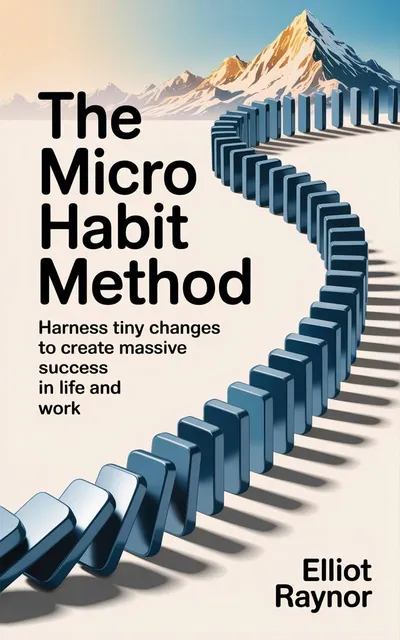
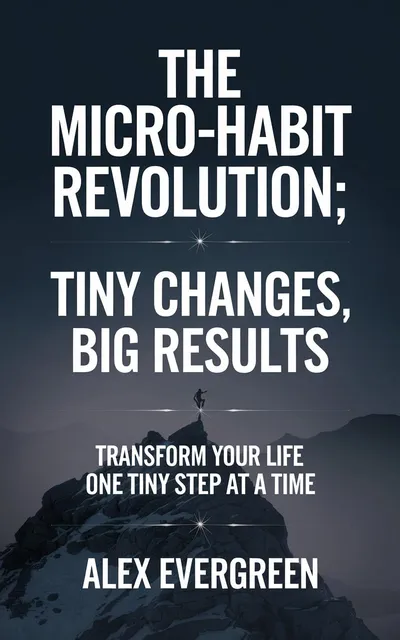
The Micro Habit Method explores this approach in detail for both life and work, and The Micro Habit Revolution is a shorter, punchier introduction if you want quick inspiration.
Micro habits for a calmer mind
- Three slow breaths before opening email
- One sentence of gratitude before bed
- One minute outside in daylight each morning
- Phone in another room for the first ten minutes of the day
Micro habits for focus
- Write tomorrow's top task before finishing work
- Set a 10-minute timer and start the task you are avoiding
- Close all browser tabs except one before starting deep work
If procrastination is your main challenge, Time Warrior covers why we put things off and practical systems for getting more done in less time.
Micro habits for mornings
Mornings set the tone for the day, but a two-hour "perfect morning routine" is unrealistic for most people. Start with one or two anchors, like a glass of water and five minutes without your phone, and build from there. Rise & Shine offers flexible morning routines that fit different lifestyles.
Connecting habits to bigger goals
Micro habits are the engine, but it helps to know where you are driving. Once you have a few small habits running, it is worth stepping back to ask what bigger goals they serve, and whether you need a plan to connect today's actions to next year's dreams. Goal Getter Blueprint is about turning big ambitions into daily wins with planning and focused action.
Common mistakes
- Starting too many at once. One new habit at a time. Add another only when the first feels automatic.
- Making it too big. If you skip it, it is too big. Shrink it further.
- All-or-nothing thinking. Missing a day doesn't break anything. Try the rule "never miss twice".
- Relying on motivation. Design the environment so the habit is the easy choice.
The takeaway
Lasting change rarely comes from dramatic overhauls. It comes from small actions repeated until they become part of who you are. Pick one tiny habit, anchor it to something you already do and start today. It will feel almost too small to matter, which is exactly why it works.
This article is general information, not medical or mental health advice. If you are struggling, please speak to your doctor or a qualified therapist.